
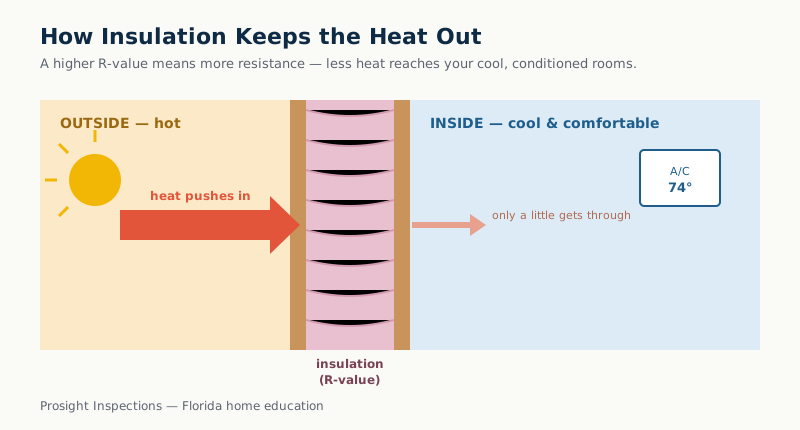
In most of the country, insulation is about keeping heat in. In Florida, it’s the opposite — it’s about keeping heat out. Insulation is one of the least visible parts of your home and one of the biggest levers you have on your monthly power bill. Here’s how it works, the types and amounts that matter in our climate, and how to make sure yours is actually doing its job.
How insulation works: R-value in plain English
Insulation slows the movement of heat. Its effectiveness is rated as an R-value — the higher the number, the more it resists heat flow. All summer, the sun heats your roof and walls, and that heat constantly tries to push into your cool, conditioned living space. Good insulation slows that push, so your air conditioner doesn’t have to run as long or as hard to keep up. Less runtime means lower bills and a longer-lived system.
The main types of insulation
Not all insulation is the same. The most common types in Florida homes are:
- Batts and rolls — the familiar fiberglass or mineral-wool blankets fitted between studs and joists. Affordable and common, but only as good as the fit; gaps and compression cut their performance.
- Blown-in (loose fill) — fiberglass or cellulose blown across an attic floor. It fills oddly shaped spaces well and is the workhorse of Florida attics, though it can settle over time and lose depth.
- Spray foam — expands to fill gaps and also air-seals as it insulates, giving a high R-value per inch. It costs more but performs strongly, especially in tricky areas.
- Radiant barrier — a reflective foil layer that reflects radiant heat rather than resisting conductive heat. It’s a complement to insulation, not a replacement, and it’s particularly valuable in Florida attics (more in our attic guide).
How much insulation does a Florida home need?
For our climate, energy guidelines generally call for attic insulation in the range of about R-30 to R-49 (roughly 10–16+ inches of blown-in, depending on the material). Walls are typically lower simply because they’re thinner. Many older Florida homes fall well short of current recommendations — which is exactly why topping up attic insulation is one of the highest-return upgrades available here. The goal isn’t a specific number for its own sake; it’s enough resistance that your AC isn’t fighting the attic all afternoon.
Insulation and air sealing: a team effort
Insulation works best alongside air sealing. Insulation slows heat moving through materials; air sealing stops hot, humid outdoor air from leaking in through the small gaps around recessed lights, wiring penetrations, plumbing, and the attic hatch. Do one without the other and you leave savings on the table. Together they keep your home cooler, drier, and cheaper to run — and they reduce the humidity load that makes a house feel sticky even when the thermostat says it’s cool.
How insulation connects to the rest of your home
Insulation doesn’t work alone:
- Your HVAC system is its closest partner. Weak or missing insulation forces the AC to run longer, wear faster, and cost more. Well-insulated homes get more comfort from a smaller, less-stressed system — and longer equipment life.
- Your ductwork matters too. Ducts running through a hot attic lose cooling on the way to your rooms; insulated, well-sealed ducts protect the air you’ve already paid to cool.
- Moisture control depends on insulation. When humid air reaches cool surfaces, it can condense and feed mold. Proper insulation and air sealing keep those temperature swings in check.
Signs your insulation is underperforming
- Power bills creeping up without a change in habits.
- Rooms that are noticeably hotter than others, or a second floor that never cools.
- An AC that runs almost constantly on summer afternoons.
- A home that feels humid even when it’s cool.
- Visible thin spots, gaps, or damp insulation in the attic.
Keeping insulation costs (and power bills) low
- Check the levels. Insulation settles, shifts, or gets disturbed by other work over the years, leaving thin or bare spots that quietly raise your bill.
- Keep it dry. Wet insulation loses most of its R-value and often hides a roof or plumbing leak. Damp insulation is always worth tracing to its source.
- Seal first, then add. Air-seal the gaps, then top up the insulation; the two together pay back far faster than either alone.
Don’t overlook the ducts and the attic hatch
Two spots quietly undo good insulation. Ductwork running through a hot attic should be sealed and insulated, or it loses cooling before the air ever reaches your rooms. And the attic hatch itself is often an uninsulated hole in your ceiling — weatherstripping it and adding a simple insulated cover closes one of the most common gaps in an otherwise well-insulated home. Small, inexpensive fixes like these often deliver comfort gains out of proportion to their cost.
Insulation and Florida humidity
Insulation does more than save energy in our climate — it also helps manage humidity and condensation. When warm, moist outdoor air meets cool, conditioned surfaces, water can condense, and that moisture is what feeds mold and musty odors. Adequate insulation keeps interior surfaces closer to room temperature, reducing the cool spots where condensation forms. It also steadies the feel of your home: a well-insulated, well-sealed house holds a comfortable temperature and humidity far more evenly, so rooms don’t swing from clammy to cold as the AC cycles. That’s especially true in older Florida houses, where decades of settling, renovations, and pest or storage activity often leave the original insulation thin, displaced, or partially missing without anyone realizing it.
Why an annual look matters
Insulation problems are invisible — until you see them on your power bill or until moisture damage appears. This is where thermal (infrared) imaging shines: missing, settled, or wet insulation shows up clearly as temperature differences across a wall or ceiling, because the camera sees heat directly. Prosight includes thermal imaging on every full home inspection, so an annual check confirms your coverage is intact and flags moisture early. It’s a small step that protects both your comfort and your savings — and it’s one of the many reasons annual inspections pay for themselves. If it’s time for a fresh look, schedule an inspection.
← All Notices