
Your roof is the hardest-working part of your house. In Florida it stands up to blistering sun, daily summer downpours, salt air, and hurricane-season wind — all year, every year. Understanding how it works makes it far easier to protect, to budget for, and to keep your home insurance affordable. This guide breaks down what your roof is really doing up there, the signs that it needs attention, and the small habits that prevent big bills.
How your roof actually works
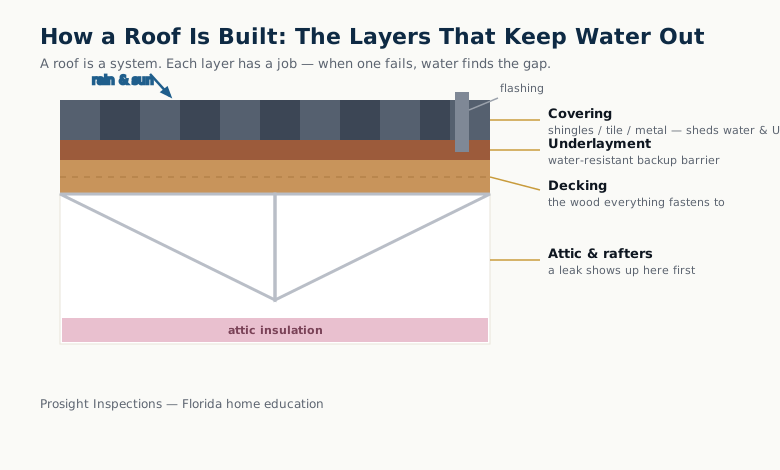
A roof is a system, not just the shingles or tiles you see from the street. Each layer has a job:
- The covering — asphalt shingles, concrete or clay tile, or metal — sheds water and absorbs the punishment from UV and heat.
- The underlayment — a water-resistant membrane beneath the covering — is your backup barrier if wind-driven rain ever gets past the surface.
- Flashing — the metal at valleys, chimneys, skylights, vents, and where the roof meets a wall — channels water away from the spots most likely to leak.
- The decking — the wood surface everything is fastened to — gives the roof its strength and its nailing base.
When every layer is intact, water runs off and away, and the wood, attic, and rooms below stay dry. When one layer fails — a cracked tile, a lifted shingle, a tired flashing joint — water finds the gap and works its way in. Most roof failures are not dramatic; they’re slow, quiet leaks that do their damage long before anyone notices a stain on the ceiling.
The main roofing types in Florida
Florida homes use three coverings most often, and each behaves differently in our climate:
- Asphalt shingles are the most common and the most affordable. They install quickly and repair easily, but our UV and heat age them faster than the national average — expect roughly 15–20 years here, sometimes less on a south-facing slope.
- Concrete and clay tile last much longer (often 30–50 years) and handle heat beautifully, but the tiles are brittle underfoot and the underlayment beneath them typically needs replacement well before the tiles do.
- Metal roofing is increasingly popular in Florida for its longevity (40+ years), wind resistance, and energy reflectivity. It costs more up front but can be the most economical choice over time.
Knowing what you have — and roughly how old it is — is the foundation of every smart roof decision you’ll make.
How your roof connects to the rest of the house
A roof problem almost never stays on the roof. A pinhole flashing leak shows up months later as a stained ceiling, damp attic insulation, or mold in a closet. That’s why your roof, your attic, and your drainage all have to be considered together:
- Attic ventilation keeps the underside of the decking cool and dry. A poorly vented attic bakes your shingles from below and shortens roof life — more on that in our guide to attic ventilation and insulation.
- Gutters and grading carry roof water away from the foundation. Roof water dumped next to the house is one of the most common causes of foundation and moisture problems.
- Insulation in the attic depends on a dry, sound roof above it; a leak ruins insulation’s R-value fast and can quietly raise your cooling bill.
Warning signs your roof needs attention
You don’t have to climb up to spot trouble. Watch for these from the ground and from inside:
- Shingle granules collecting in gutters or at downspout outlets (a sign of wear).
- Shingles that look curled, cracked, lifted, or simply missing after a storm.
- Cracked or slipped tiles, or rust and gaps at metal seams and fasteners.
- Dark streaks, moss, or ponding areas that never seem to dry.
- Inside: ceiling stains, peeling paint in a corner, a musty smell in a closet, or daylight visible in the attic.
Any one of these is worth a closer look before the next heavy rain.
Keeping roof maintenance costs low
The cheapest roof dollar you’ll ever spend is the one that prevents a leak. A few habits go a long way:
- Keep it clear. Remove leaves and debris from valleys and gutters, and trim back branches that rub the surface or could drop limbs in a storm.
- Watch the details. Worn sealant around vents, exposed nail heads, and loose or rusted flashing are inexpensive fixes today and costly ones if ignored.
- Repair promptly. A single lifted shingle replaced this month is a few dollars; the decking, insulation, drywall, and mold remediation it prevents can run into the thousands.
- Plan for the clock. When your roof nears the end of its expected life, budget for replacement on your terms instead of after a failure during storm season.
Your roof, storm season, and your insurance
In Florida, your roof is also a major factor in whether you can get — and afford — homeowners insurance. Carriers look hard at a roof’s age, material, and condition, and many of the features that earn you premium discounts are roof-related: roof shape, deck attachment, roof-to-wall connections, and a sealed secondary water barrier. That overlap is exactly why a wind mitigation inspection can pay for itself, and why roof condition is central to a 4-point inspection. We cover the savings in detail in how wind mitigation lowers your insurance. After any major storm, a prompt roof check also creates the documentation you’ll need if you ever file a claim.
Why an annual look matters
Most roof damage starts small and out of sight — exactly where a homeowner can’t see it from the ground. An annual inspection catches lifted or cracked coverings, failing flashing, and the first signs of moisture before they reach the wood and the rooms below. It also keeps you ahead of your insurer with documentation of good upkeep. If it’s been more than a year since a professional looked at your roof, schedule an inspection — it’s the lowest-cost insurance you can buy for the most important system on your home, and it’s a core reason annual inspections pay for themselves.
← All Notices