
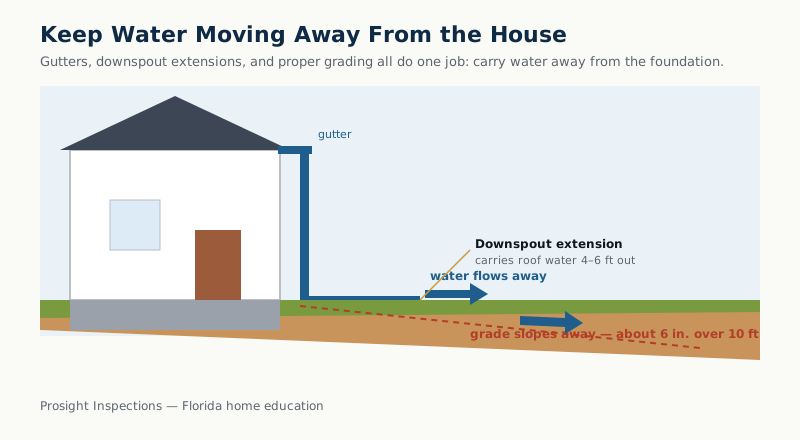
In Florida, with our heavy seasonal rain and high water table, water management is everything. Almost every serious, expensive home problem — foundation movement, moisture intrusion, wood rot, and mold — traces back to water that wasn’t directed away from the house. The good news: the systems that control it are simple, visible, and inexpensive to maintain.
The one rule: move water away from the house
Every part of your home’s water-discharge system exists to do one thing — carry water away from the foundation and the walls. When it works, your home stays dry. When it fails, water pools against the foundation, soaks into the ground beside it, and finds its way in. Let’s look at the parts.
The parts that move water
- Roof and gutters. Your roof sheds an enormous volume of water in a Florida downpour. Gutters catch it and route it to downspouts instead of letting it sheet off and erode the ground at the foundation.
- Downspouts and extensions. Downspouts must carry water several feet away from the house. A downspout that dumps right at the foundation is one of the most common — and most damaging — drainage mistakes.
- Grading (the slope of the ground). The soil around your home should slope away from it — roughly 6 inches of fall over the first 10 feet. This is the single biggest factor in keeping water out, and it’s easy to get wrong over time as soil settles.
- Swales and area drains. On many Florida lots, shallow graded channels (swales) carry runoff to the street or a retention area.
- The AC condensate line. Your air conditioner pulls a surprising amount of water out of the humid air. That condensate must drain to the outside, not pool against the slab or back up into the home.
How drainage connects to the rest of the house
Drainage problems rarely stay outside. Water against the foundation can lead to settlement and cracking; water wicking into walls causes stucco damage, wood rot, and interior moisture; and persistent dampness feeds mold and draws pests and termites. A roof leak and a drainage problem can even masquerade as each other — which is why a whole-home view matters, the same reason behind our case for annual inspections.
Common Florida drainage problems
- Negative grading — soil that slopes toward the house, often from settling or added landscaping beds.
- Clogged or missing gutters letting roof water hammer the ground at the foundation.
- Downspouts that end at the wall instead of extending away.
- Mulch or soil piled against the stucco, holding moisture against the wall and bridging over the weep screed.
- A blocked or disconnected AC condensate line pooling water at the slab.
Keeping water-discharge costs low
- Clean your gutters at least twice a year, and after big storms.
- Add downspout extensions so water exits at least 4–6 feet from the house.
- Re-establish grading where soil has settled against the foundation, and keep mulch a few inches below the stucco line.
- Keep the AC condensate line clear — a clogged line is a frequent cause of both water damage and AC shutdowns.
- Watch low spots in the yard that hold water after rain; standing water near the house is a warning sign.
Why an annual look matters
Drainage defects are easy to miss because they only reveal themselves in a hard rain — and by the time you see interior damage, water has been working for a while. An annual inspection looks at grading, gutters, downspouts, and the condensate system together, and Prosight’s included thermal imaging can reveal moisture that’s already gotten into a wall before it shows on the surface. Keeping water moving away from your home is one of the cheapest forms of protection there is — and when you’re ready for a professional set of eyes, schedule an inspection.
← All Notices